


A YEAR ON YOUR LAND
BEFORE THE FIRST LINE.
THAT IS WHY NOTHING
SURPRISES US LATER.


MATERIAL — WHAT THE LAND GIVES
THREE HOUSES, THREE SEAMS
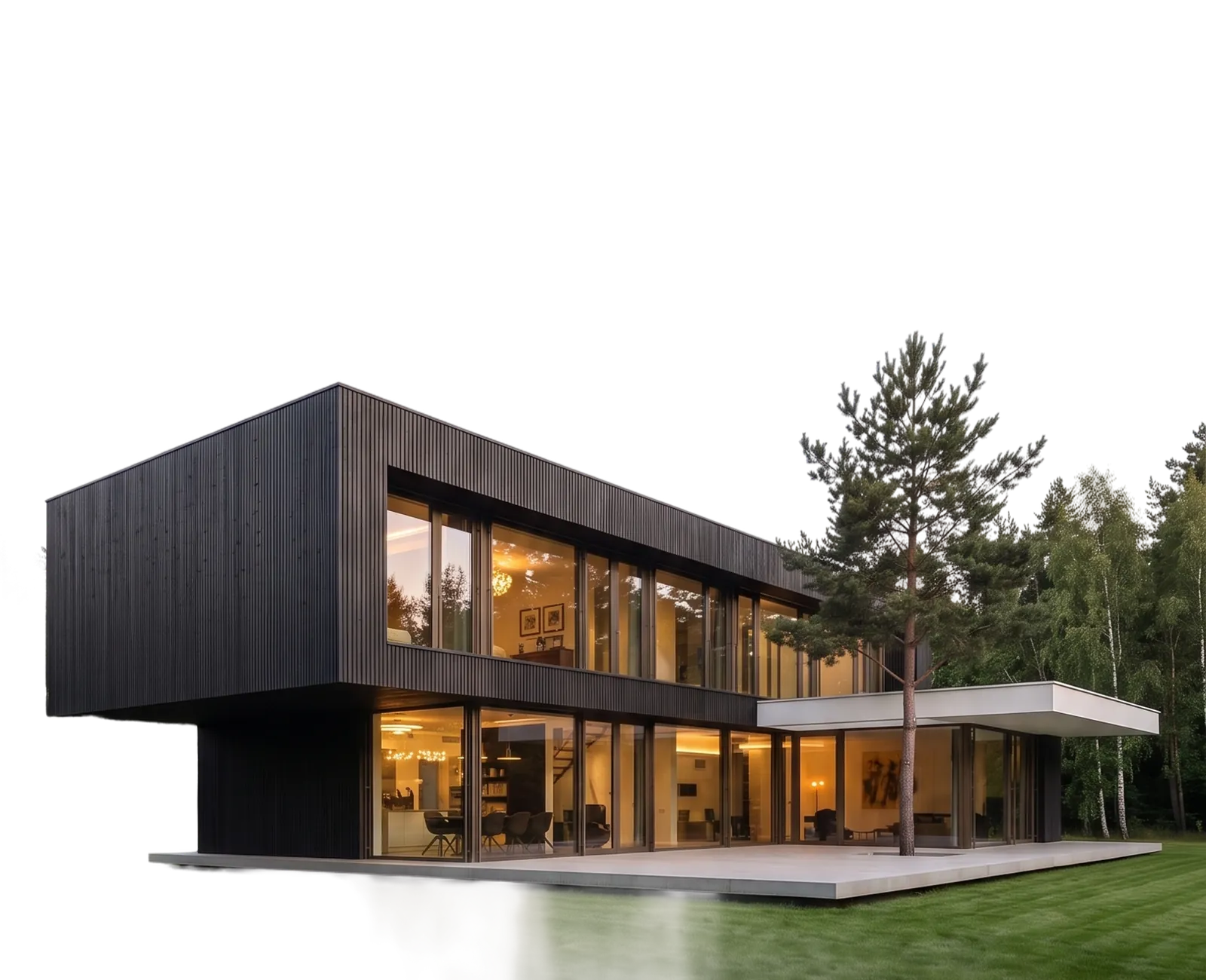
BOROVA — CHARCOAL LARCH
Burnt and brushed outside, planed smooth in — the kitchen wall is the same board as the facade, turned inward.
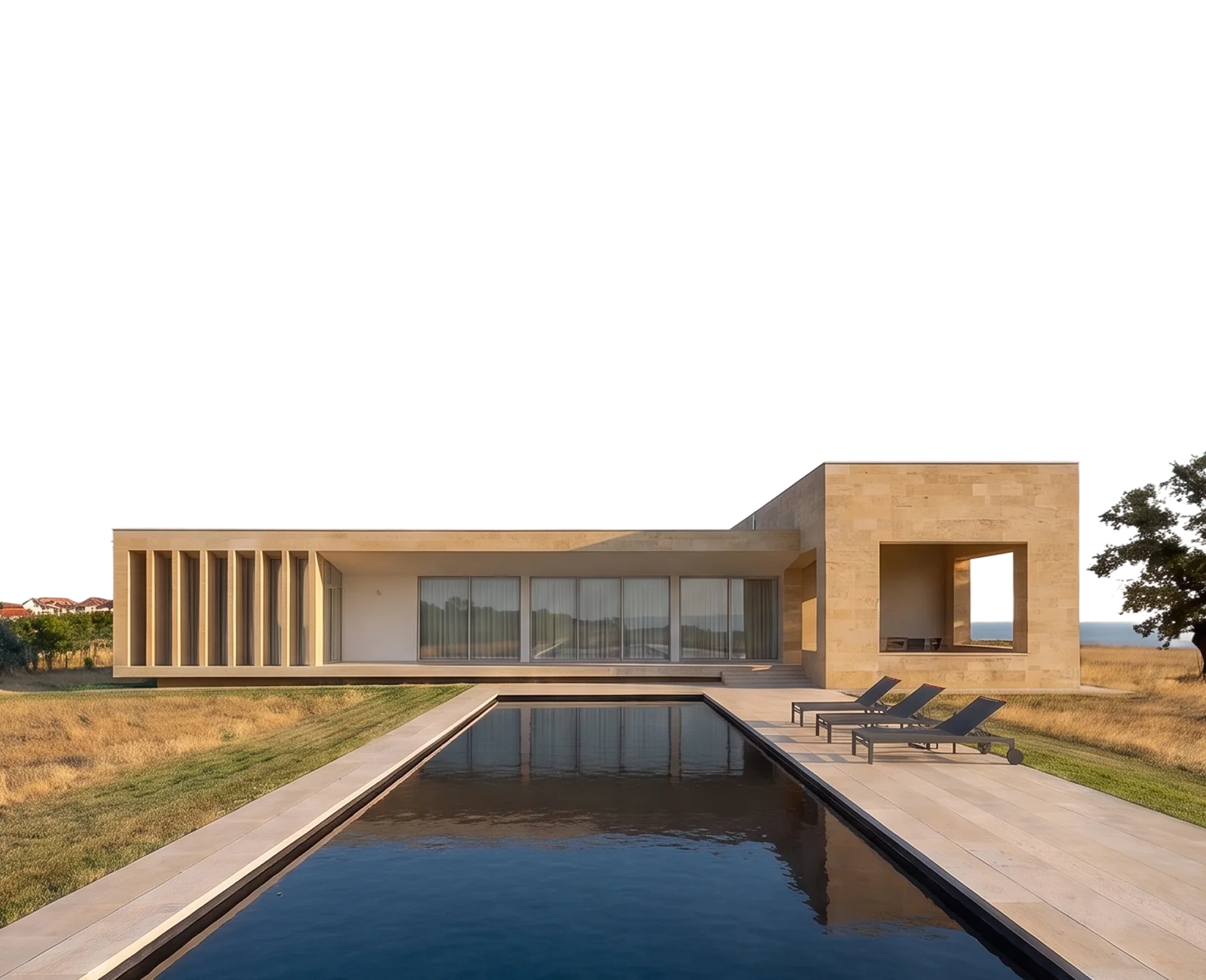
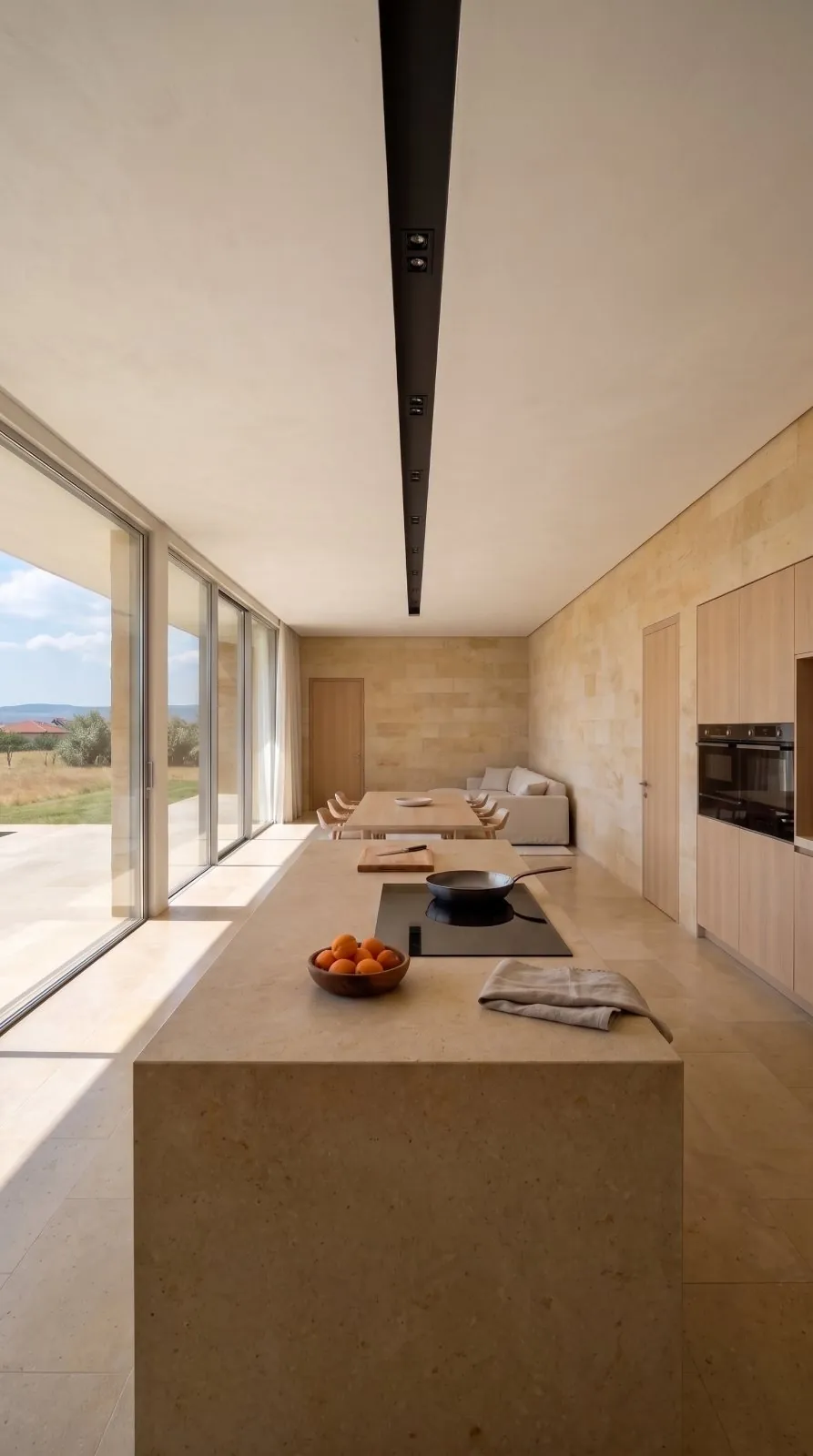
AKATSIA — COQUINA
Cut from the Odesa seam and left sawn. The whole run is one stone, and it holds the room cool all summer.
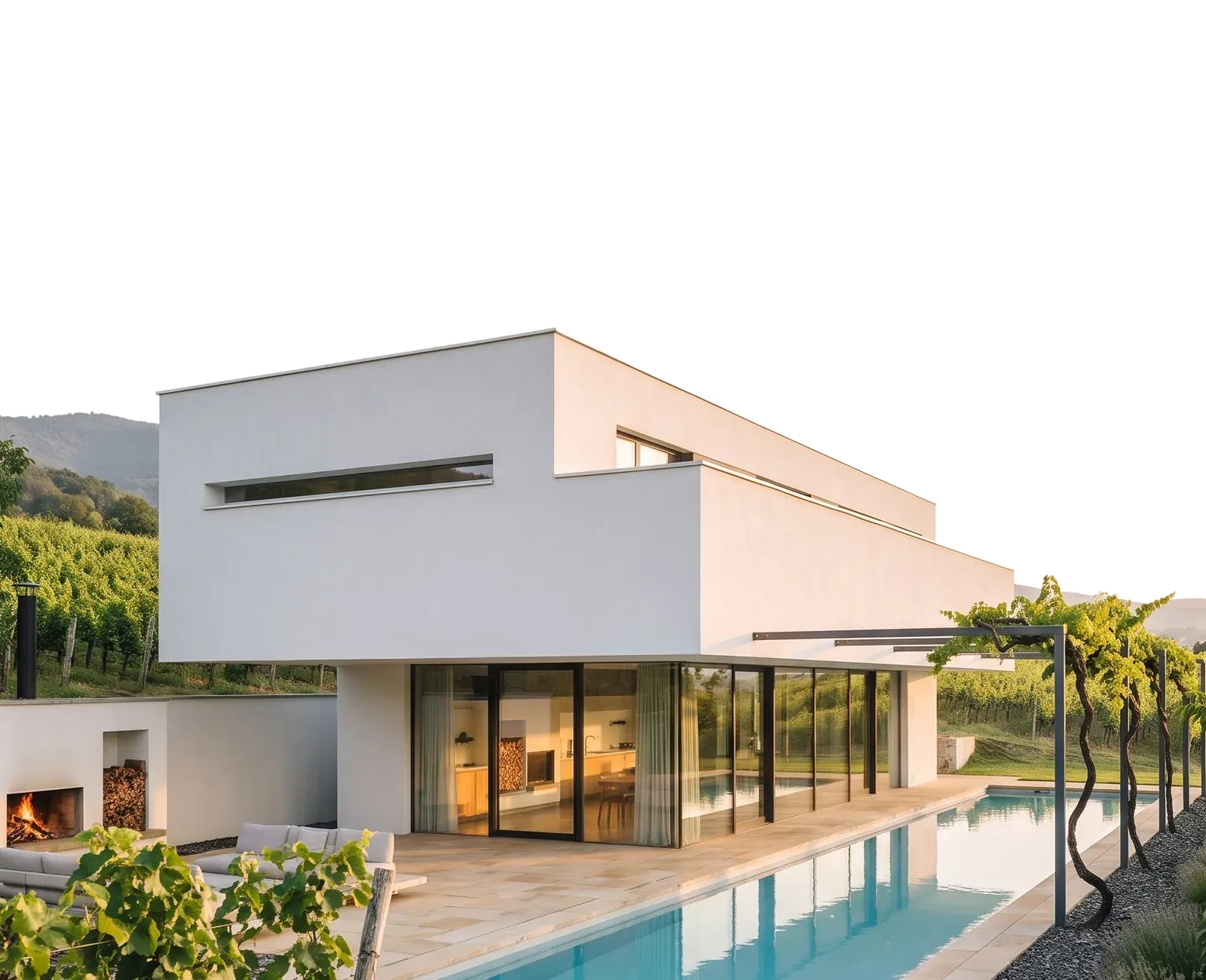
LOZA — BASALT
Volcanic chippings off Chorna Hora, ground into the floor that carries the vineyard indoors.
PRACTICE — HOW WE WORK
A YEAR ON THE LAND
BEFORE A LINE IS DRAWN.
Four rules hold every project together. They are why a SOTIS house takes three years, and why it is still the right house twenty years later.
001
SURVEY FIRST
Twelve months on the plot before anything is drawn: the light in February, where the wind breaks, where water stands after rain, what stone is already under the grass.
002
ONE OFFICE, ONE CONTRACT
Survey, architecture, engineering and site supervision stay with the same eleven people. Nothing is handed over a fence, so nothing is lost in the handover.
003
THE MATERIAL IS ALREADY THERE
Coquina from the Odesa seam, larch from the Kyiv pine belt, basalt from the Zakarpattia slopes. The cheapest material on a site is usually the site itself.
004
FINISHED MEANS STANDING
We stay on site to the last detail. A project closes when the house is built and the land has grown back around it, not when the drawings are sent.
PRACTICE — THE TEAM
ELEVEN PEOPLE

SOLOMIYA HRYTSAK
FOUNDING PARTNER
Set up the Oslo office in 2019 after eleven years on Norwegian coastal sites. She runs the survey year on every project and signs off the ground before anyone draws a line.
01 / 06
01 / 06
PRACTICE — OSLO
SINCE 2019
ELEVEN PEOPLE IN ONE OFFICE. THREE SITES A YEAR, AND THE FIRST TWELVE MONTHS OF EACH ONE SPENT WALKING THEM.
Founded in Oslo in 2019. The three houses here stand in Ukraine — steppe limestone, pine sand and a volcanic slope — and everything the practice knows about difficult ground was learned further north, on granite and dune.
OFFICE
OSLO
PEOPLE
ELEVEN
SITES A YEAR
THREE
AVERAGE PROJECT
THREE YEARS
Three years, and the first is spent not drawing. Twelve months of survey, then nine of drawings and permits, then a build rarely under fourteen on difficult ground. We say at the first meeting if yours needs longer.
Someone from the office is on your land once a month for twelve months, and the year has to include a winter. Where the water goes after a storm, where the frost sits longest, what the light does at nine in both June and December. We dig test pits. By the end there is a document of forty-odd pages, and it decides the house.
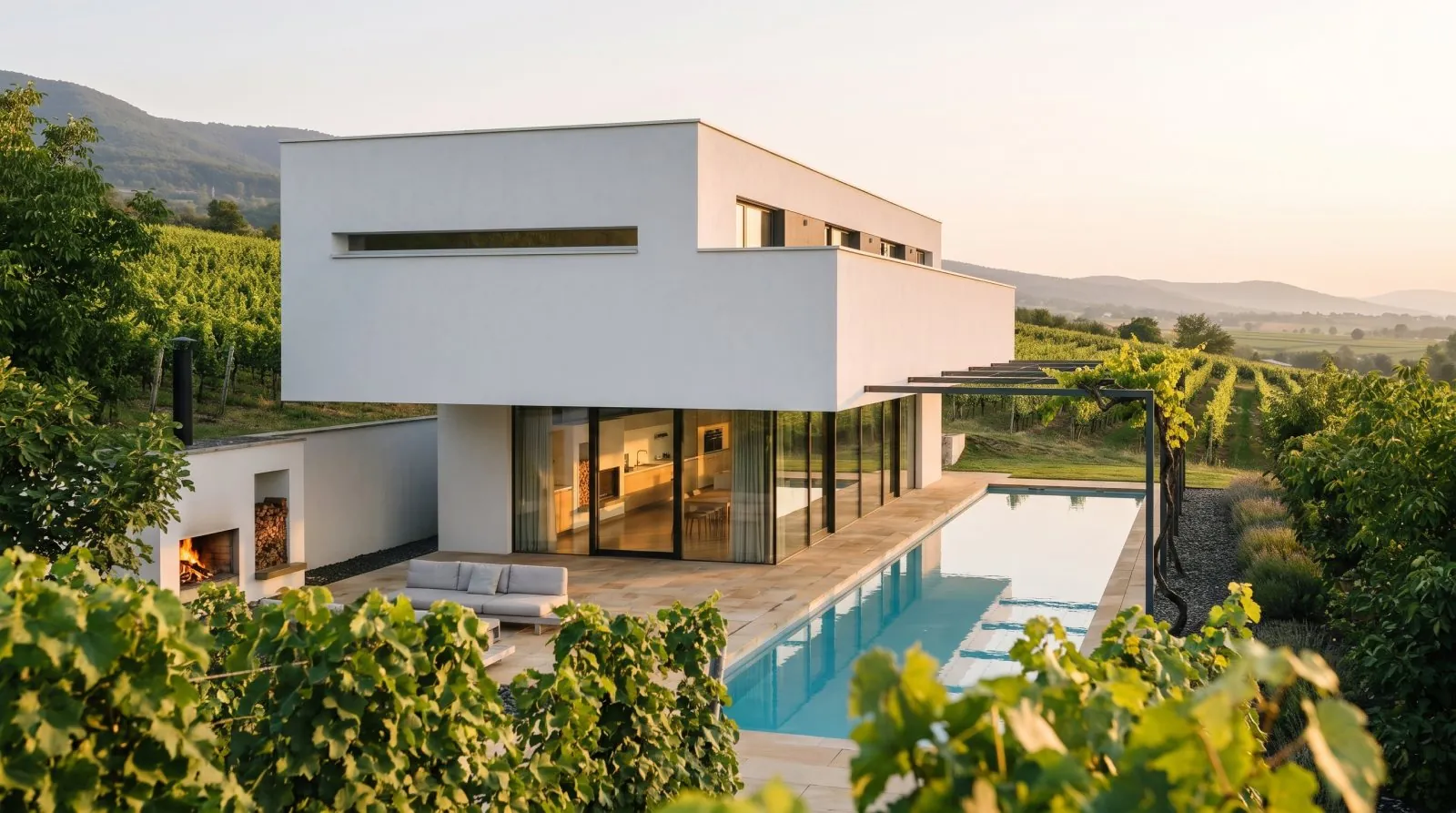
Yes, and usually cheaper. We walk shortlisted plots with you before anyone signs — the ground decides most of the budget, and photographs say nothing about the water table.
Then we say so, in writing, with the reasons. The fee is fixed and comes off the design fee if you go ahead, so a no costs nothing further and you keep the document. Four times in seven years.
Local contractors we have worked with before, under our supervision, on a contract we write. We are on site weekly, and the site architect is one of the people who drew it. We take no margin on the construction.
The survey is a fixed fee, the design a percentage of the build, and the build is whatever the ground and the market decide. We give you a range at the first meeting and we will not have moved far from it by the end.
Always, and not afterwards. The joinery is drawn with the plan, not onto it — every kitchen in these three houses was stood up in ply on site before it was built. Lighting, stone and ironmongery are ours as well.
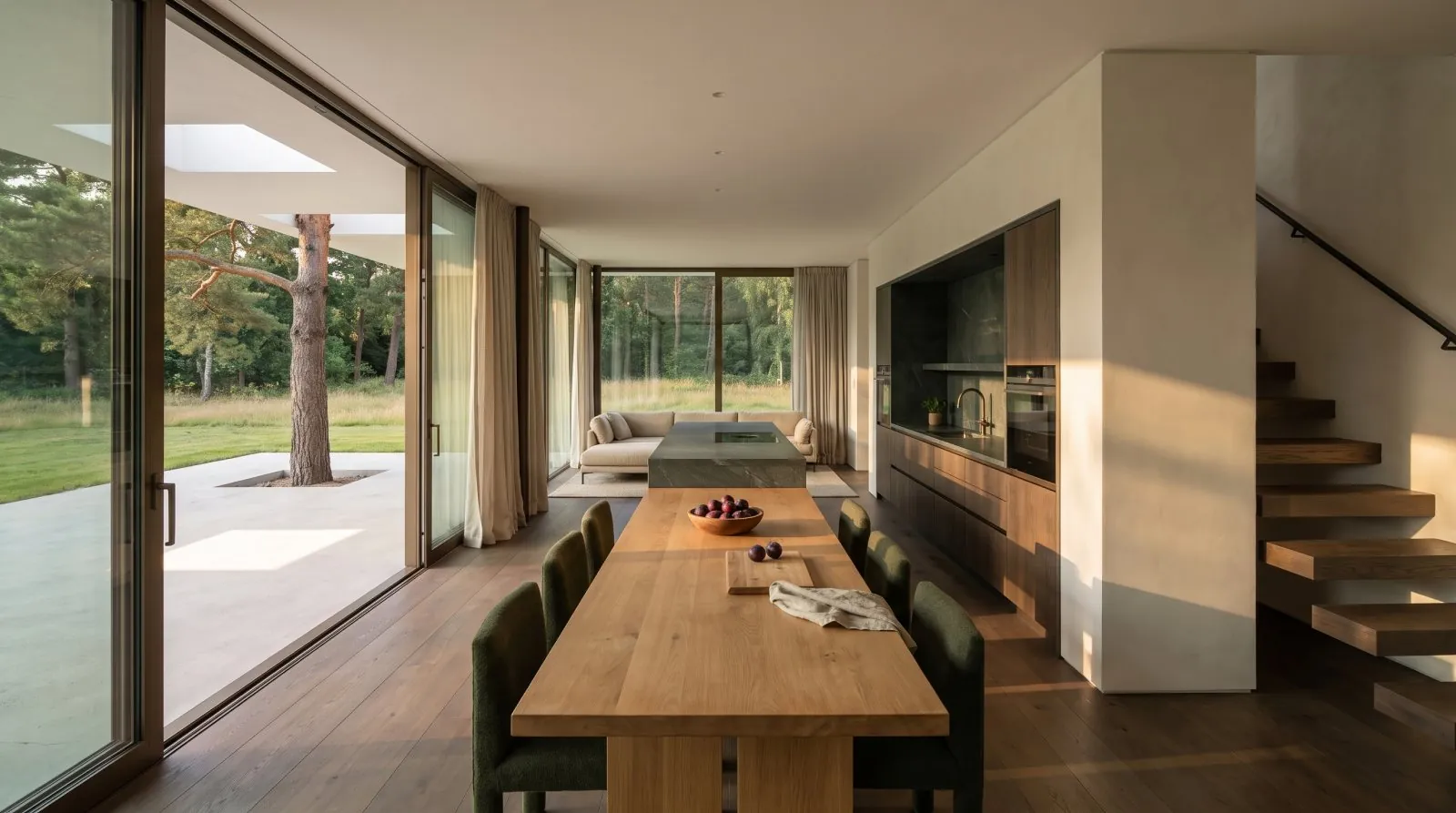
The practice is in Oslo, and these three houses stand in Ukraine — the Odesa plateau, a Zakarpattia vineyard slope and the Kyiv pine belt. We still take Norwegian coastal work, which is where most of what we know about difficult ground was learned. We turn down work we cannot stand on every month.
TELL US ABOUT THE SITE
WE ANSWER EVERY ENQUIRY WITHIN A WEEK